Tour Designers Inc.

Karate Tour

Karate Tour

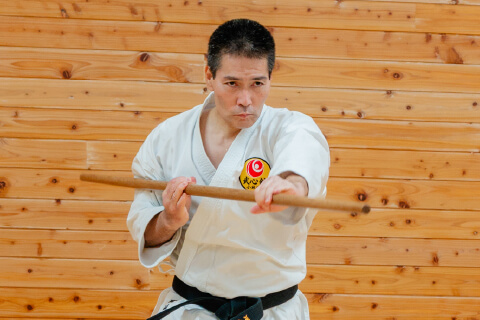
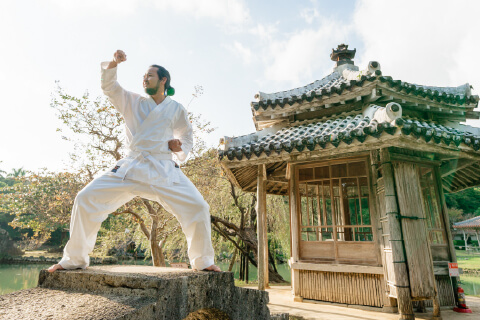
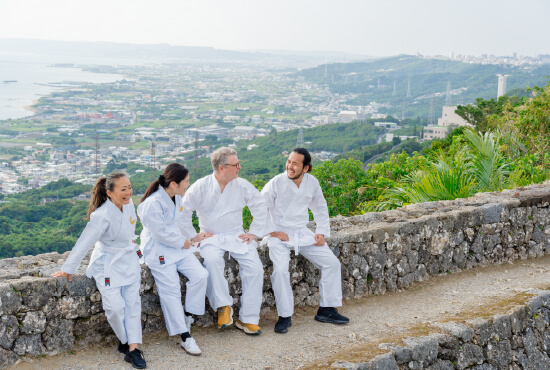
Karate is not solely about strength or competition.
It begins with a bow. The spine aligns. The breath settles. One turns inward.
Within this sequence of gestures lives a quiet philosophy — one that Okinawan people have carried for generations.

Training becomes a time of alignment, a space where body and mind are gently brought into balance.
As you visit places connected to its origins, the historical and spiritual foundations of karate begin to reveal themselves.

For those who already practice karate, this journey offers a rare and meaningful return to its source.
For those encountering it for the first time, it offers an opportunity to experience karate as culture — felt through the body rather than explained through words.

This is not a journey to master techniques. It is a journey to see Okinawa through karate.
In each bow, in each deliberate movement, the spirit cultivated by this land quietly comes into view.
And that awareness — once felt — remains with you long after the journey ends.

Karate Tour
Karate Tour Karate Tour

●4 days / 3 nights model itinerary
※Please note that the itinerary is subject to change or cancellation due to seasonal conditions, weather, or other unforeseen circumstances.

Tour Digest

A Four-Day Journey to Discover Okinawa Through Karate
This four-day journey invites guests to experience Okinawa through karate. Through hands-on training sessions and visits to sites connected to its origins, participants engage with Okinawa’s history and spiritual culture in both body and mind.

During practice, emphasis is placed on breath, posture, and etiquette — transforming training into a time of alignment and recalibration.
Each session is flexibly designed according to participants’ experience, age, and intentions. Beginners are guided through foundational movements, while experienced practitioners are offered deeper physical and philosophical engagement.

Visits to historically significant locations reveal the cultural and spiritual context in which karate was shaped. Rather than approaching karate as mere technique, guests experience it as living culture.

By incorporating training as a moment of intentional stillness, the journey is open to:
●those wishing to reconnect with their breath and posture,
●those seeking to experience culture through the body,
●and those hoping to share meaningful time with partners, friends, or family.

For those who already practice karate, it offers a quiet and reflective encounter with its origins.
This is not a journey to simply learn karate. It is a journey to understand Okinawa through karate.
A new Okinawan experience — where culture and the body are brought into dialogue.

Example

●DAY1 | Arrival — A Journey Beginning with a Bow

Morning | Introduction to Okinawan Karate
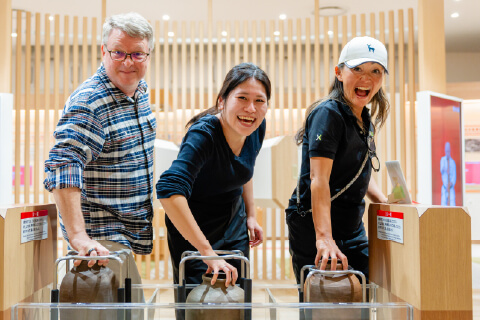
The journey begins at the Okinawa Karate Kaikan. Accompanied by a guide, guests explore exhibitions and visual archives to understand the history and development of karate.
Through the philosophy embodied in “beginning and ending with a bow,” participants gain insight into karate not only as martial discipline, but as an expression of Okinawan spiritual culture.

Afternoon | Demonstration & First Practice
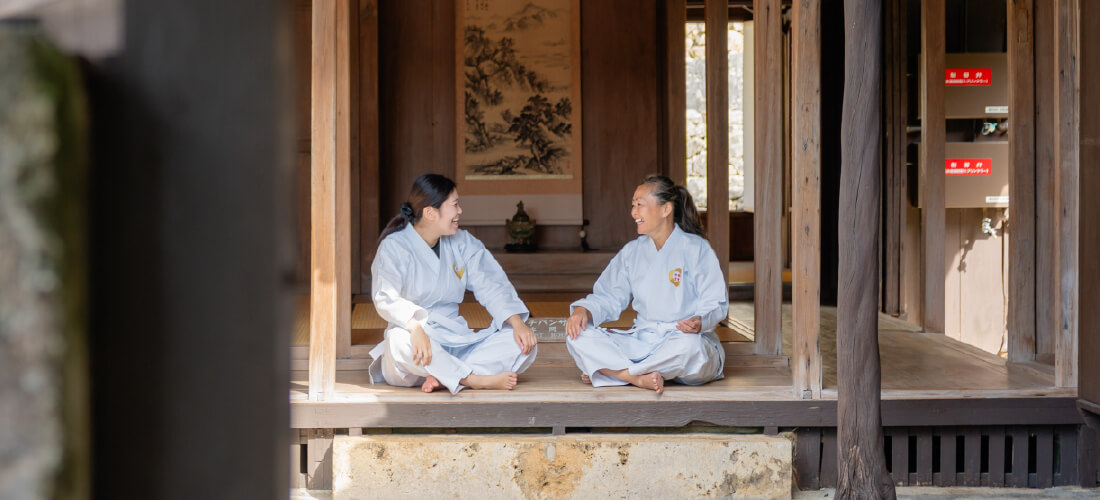
A master’s demonstration sets the tone for the experience. In the quiet rhythm of breath and movement, concentration and etiquette become palpable.
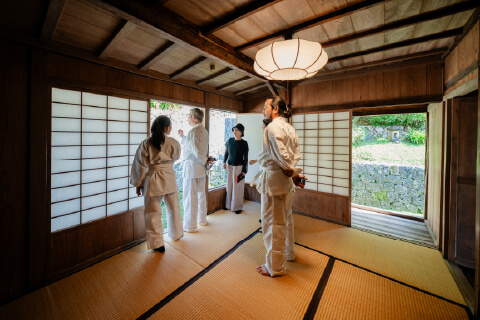
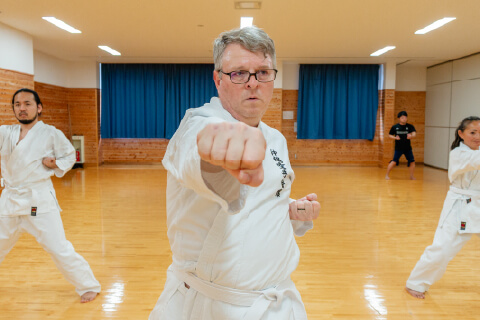
Guests then change into a karate uniform and begin their first practice session. Through breathwork, posture alignment, and fundamental etiquette, karate is introduced as a time of inward focus.
Sessions are thoughtfully adapted to each participant’s background and experience. Beginners work with foundational forms, while experienced practitioners engage in deeper physical and philosophical exploration.

In the evening, guests enjoy traditional Okinawan cuisine, experiencing the food culture that has long supported practitioners in daily life.

●DAY2 | Origins — History and Sacred Landscapes

Morning | Practice at a Local Dojo
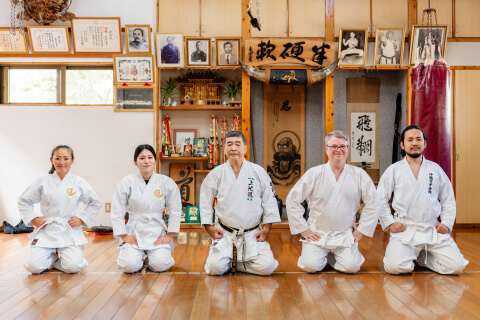
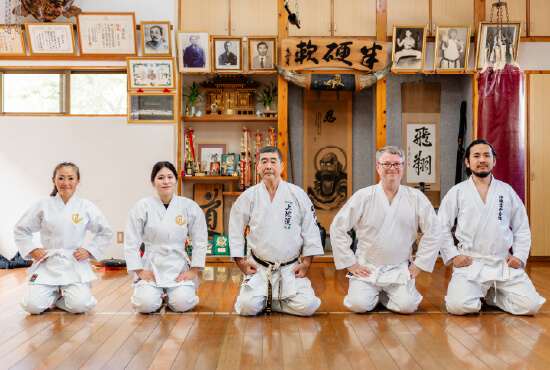
Participants join training at a community dojo — a space where local residents practice regularly.
Sessions are adjusted according to experience level and personal intention, allowing each guest to engage at an appropriate depth.
Through repeated movement and breath, participants experience karate as a living daily discipline rather than a staged performance.
Training in a locally rooted dojo offers insight into the everyday culture of karate beyond tourism contexts.

Afternoon | Visiting Sites Connected to Karate
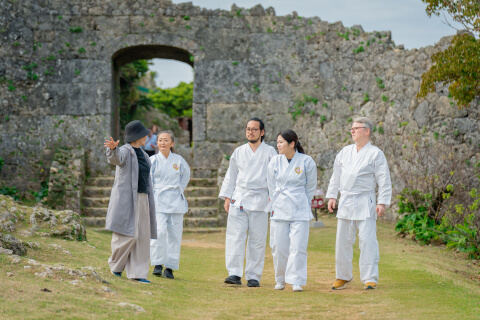
The afternoon is dedicated to visiting locations associated with karate’s historical development.
As guests explore these landscapes, the historical and spiritual foundations that shaped karate become clearer.
Participants also observe how karate continues to be integrated into daily Okinawan life, deepening their understanding of its cultural continuity.

The day concludes with a dinner featuring Ryukyuan cuisine, connecting martial tradition and food culture through lived experience.

●DAY3 | A Living Legacy

Morning | Location Photography
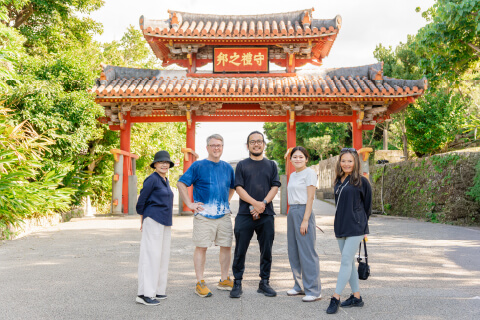
Dressed in karate uniforms, guests participate in a private photo session at historically resonant locations.
Accompanied by a dedicated photographer, moments are captured that merge personal presence with the layered memory of place.

Afternoon | Training with Students
Guests train alongside local students, experiencing how karate is transmitted across generations.
Through careful attention to breath, center of gravity, and movement, participants witness karate as an intergenerational cultural practice.
The session concludes with time for exchange with the master and students. Conversations over a shared meal offer insight into the philosophy and daily commitment behind the practice.

●DAY4 | Integration

The final morning is intentionally quiet.
Guests are invited to revisit breath and posture, allowing the experience to settle internally.
With guidance, participants reflect on their learning and share impressions within the group.
Through karate, they have encountered Okinawa. Through Okinawa, they have encountered themselves.
With a steadier breath, the journey gently returns to daily life.

Accommodation

Accommodation can be arranged according to the client’s preferences, desired level of comfort, and overall travel style.

We work with a carefully selected range of properties across Okinawa’s main island, from refined luxury resorts to boutique hotels offering a strong sense of place.

< Sample Accommodation Options >
◆Hotels on Okinawa Main Island
(Individual properties can be proposed upon request.)


【 注意事項 】

●This tour is designed to provide insight into the spiritual and cultural dimensions of karate. It is not intended for the acquisition of technical qualifications or rank advancement.
●Training content is adjusted according to participants’ age, experience, and physical condition. As the program includes physical activity, guests with health concerns are kindly requested to inform us in advance.
●Practice sessions at local dojos take place in active community spaces. These are not tourist facilities, but places where local practitioners train regularly. Guests are asked to participate with cultural sensitivity and respect.
●Photography of private property, residences, or local residents requires prior permission. Regarding photography and social media posting, guests are kindly requested to follow the guidance provided by the tour guide.
●Photographs taken by the dedicated photographer will be delivered digitally after the tour. Please note that photography may be restricted at certain locations.
●Meal offerings may vary depending on season, weather, and ingredient availability. Please inform us in advance of any allergies or dietary restrictions.
●Due to weather conditions or unforeseen circumstances, the itinerary or route may be adjusted or, in rare cases, canceled. Program timing may also vary depending on group composition.
●Should you feel unwell or experience discomfort during the program, please inform a member of staff immediately.
●The itinerary shown is a sample. Duration of stay, specific schools or masters, fully private arrangements, and other elements can be customized according to client requests.
Recommended tours
available in this category

The background
to this tour

In Okinawa, karate is not merely a martial art or a competitive sport. It is a spiritual and cultural tradition that evolved alongside the history of the Ryukyu Kingdom.
Yet much of today’s karate tourism remains focused on practitioners and enthusiasts. Opportunities to encounter the philosophy behind karate — and its deep connection to everyday life and local values — are rare.

Tour Designers has redefined karate not as a sport, but as living cultural heritage.
Within each movement lie posture, breath, and etiquette. Embedded in these elements are the ways Okinawan people have related to nature, to one another, and to inner discipline for generations.

This journey opens access to that cultural depth.
Through carefully curated practice sessions, encounters with local dojos, and visits to places rooted in karate’s history, participants experience karate not as performance, but as lived tradition.
The program is designed to welcome both experienced practitioners and first-time participants. Each element is thoughtfully adjusted to individual backgrounds, ensuring depth without intimidation.
More than a training experience, this is a cultural immersion — an opportunity to understand Okinawa through the body.

Created with a long-term vision of sustaining and transmitting this heritage for the next 100 or 200 years, the tour bridges past, present, and future — offering rare access to a tradition that continues to shape Okinawan identity today.

<Recommended tours available in this category>

Karate Before the Dojo

A Private Cultural Encounter at Nakamura House

Tour Overview

Encounter the Original Landscape of Karate within a National Cultural Treasure

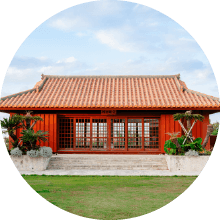
Nakamura House is a nationally designated Important Cultural Property that survived the devastation of the Battle of Okinawa, preserving its original estate structure much as it stood centuries ago.
It offers a rare glimpse into the lifestyle of upper-class farming families during the Ryukyu Kingdom era.
This exclusive program grants private access to Nakamura House, creating an opportunity to encounter the spiritual and cultural foundations of karate.

The experience begins with a guided introduction to the architecture, household design, and daily life of the period.
Through the structure of the home and the wisdom embedded in its construction, guests gain insight into the rhythm of Okinawan life in earlier centuries.

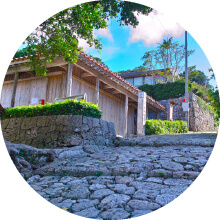
The program then moves to the stone-paved courtyard, where a karate master performs a demonstration.
Bare feet press against the stone.
Breath shifts the air. The subtle sound of the gi moving through space resonates in the open courtyard.
Rather than a staged performance, the setting evokes a time when training took place in gardens and lived environments.
Guests witness karate as it once existed — as an extension of daily life.

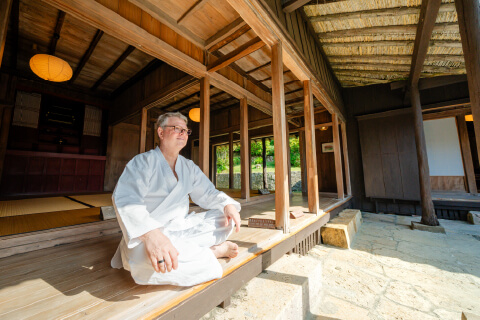
Following the demonstration, the experience continues indoors in the tatami room. Over tea and traditional sweets, guests engage in conversation with the master, exploring the philosophy of karate and the discipline behind daily practice.

Nakamura House is not a site dedicated to karate.
Yet within its raised storehouse, iron clogs and traditional implements such as the tonfa are displayed — quiet reminders that physical and spiritual training once coexisted naturally within everyday life.
Before formal dojo spaces were established, training occurred in courtyards and domestic settings.

This program invites guests to experience karate not as sport or technique, but as a cultural practice rooted in Okinawan life.
In an atmosphere that feels as though time has gently folded back into the Ryukyu era, participants encounter the original landscape from which karate emerged.

Tour Story

Karate did not begin in formal dojo spaces. Training once took place in courtyards and gardens. Feet pressed against stone and soil. The wind was felt against the skin. Long ago, the discipline of body and mind unfolded as an extension of daily life.

Nakamura House is not a site dedicated to karate. Yet the atmosphere of life during the Ryukyu era still lingers here.
Within the raised storehouse stand iron clogs and traditional implements of martial practice. Displayed alongside everyday tools, they quietly suggest that martial training was never separate from ordinary living.

The sound of bare feet against stone. Breath shifting the air. The subtle rustle of a gi in motion.
What unfolds here is not theatrical reenactment, but a small doorway into scenes that may once have repeated themselves on this very ground.

Later, in the tatami room, conversation continues in quiet tones. Over tea, the discussion turns not to technique, but to posture. Not to strength, but to presence.

Karate is experienced not as a skill to acquire, but as a cultural practice that has lived alongside Okinawan daily life.
This is a quiet encounter with karate’s original landscape.
As if time itself has taken a gentle step backward into the Ryukyu era.
And in that stillness, one begins to realize: Budō was never merely about power — but about the steady practice of aligning oneself from within.

Experience Flow

●1|Private Access & Guided Introduction

Guests enter Nakamura House under exclusive access.
The experience begins with a guided exploration of the estate’s architectural features, household layout, and the lifestyle of upper-class farming families during the Ryukyu Kingdom era. Traditional tools and the raised storehouse (takakura-style granary) are introduced as part of this cultural context.
Moving through the residence alongside the guide, participants gradually immerse themselves in the atmosphere of daily life as it once unfolded here.

●2|Karate Demonstration in the Courtyard

The program then transitions to the stone-paved courtyard.
A karate master performs a demonstration barefoot upon the stone. The sound of breath, the grounded movement across the courtyard, and the subtle motion of the gi create a deeply intimate viewing experience.
Rather than a dojo-style presentation, this setting recalls a time when training took place in domestic gardens and lived environments. Guests encounter the atmosphere of practice as it once existed — rooted in everyday life.

●3|Dialogue in the Tatami Room

Following the demonstration, the experience continues indoors in a tatami room.
Over tea and traditional sweets, guests share a quiet moment of conversation with the master. Topics may include the philosophy of karate, daily discipline, and the meaning of practice beyond technique.
Through this exchange, participants gain insight into a form of martial tradition that once lived naturally within the rhythms of ordinary life.

<Recommended tours available in this category>

Okinawan Karate:
From Origins to Living Tradition

Encountering the Spirit Within the Bow

Tour Overview

Touch the History and Living Present of Okinawan Karate

Okinawa Karate Kaikan is the official center established to preserve, transmit, and share the traditions of Okinawan karate.
In this program, guests explore the facility with a knowledgeable guide, gaining insight into the history, lineages, and philosophy of Okinawan karate.

Within the exhibition spaces, historical documents, training implements, and archival footage reveal how Okinawan karate developed and evolved over time.

For beginners, this experience serves as a thoughtful introduction to the foundations of karate. For experienced practitioners, it offers an opportunity to reconnect with the origins and deeper context of their chosen style.

The latter half of the program features a live demonstration by a karate master.
Held within the dojo or training hall, the performance unfolds in focused stillness — where the sound of bare feet against the floor, the subtle movement of the gi, and the rhythm of breath can be felt at close range.

Karate is encountered not only as knowledge, but as living presence.
This program offers a multi-dimensional experience of Okinawan karate — understanding its history while sensing its vitality in the present.
By “knowing” karate more deeply, the meaning of daily practice begins to take on new depth and clarity.

Tour Story

Under the spirit of Bankoku Shinryō — the “Bridge of Nations” — the Ryukyu Kingdom flourished as cultures crossed seas and met upon these islands. It was in this era of exchange that karate was born in Okinawa.
Feet pressed into earth. Wind moved across the skin. Training unfolded as an extension of daily life.
Over time, lineages formed. Systems were refined. What began in courtyards was organized and passed down — continuing into the present.
Okinawa Karate Kaikan stands as a place that quietly observes this journey.

Within its exhibition spaces, historical documents, tools, and archival footage reveal more than the evolution of a martial art. They carry traces of values long cherished in Okinawa — respect, discipline, and a way of being.
History learned as knowledge rises into the present through live demonstration in the dojo.

The sound of feet against the floor. The measured rhythm of breath. The stillness charged with focus.
Karate reveals itself not as a relic of the past, but as a living practice that continues to breathe within this land.

Then comes dialogue.
The conversation moves beyond technique — toward posture, daily discipline, and ways of living.

To “know” karate is to encounter the spirit of Okinawa itself.
And gradually, one begins to realize:
Karate was never merely about strength. It has always been a practice of aligning oneself from within.
Knowledge becomes experience. History becomes present. And that awareness quietly returns to the self.

Experience Flow

●1|Okinawa Karate Kaikan Guided Exploration

In the birthplace of karate, participants trace how this practice was cultivated in Okinawa and how it has been passed down through generations.
Within the reference library and exhibition spaces, historical documents, traditional training tools, and archival footage reveal the development and diversity of Okinawan karate.
As different lineages and philosophical foundations are introduced, the broader picture of karate gradually takes shape.
Reflecting on the phrase, “Karate begins and ends with a bow,” guests explore the philosophy behind this gesture — sensing how karate is both a martial discipline and an expression of Okinawan spiritual culture.

●2|Karate Demonstration in the Dojo

The group moves to the training hall within the facility.
As the demonstration begins, the atmosphere subtly shifts.
The sound of feet pressing against the floor. The quiet rustle of the gi. The measured rhythm of breath.
The history learned in the exhibition spaces rises before you as a living present reality.

●3|Dialogue with the Karate Master

Following the demonstration, guests engage in conversation with the karate master.
Discussions may touch on differences between lineages, approaches to daily training, and the role of karate within Okinawan culture.
What was once understood as knowledge begins to take on depth — becoming more dimensional and personal.
It is the moment when karate shifts from something learned to something experienced.

<Recommended tours available in this category>

Okinawan Karate Experience

Training That Begins with a Bow

Tour Overview

Held at the Okinawa Karate Kaikan, this program offers a hands-on introduction to the fundamentals and etiquette of Okinawan karate.

Participants encounter the foundations that have been passed down in Okinawa, the birthplace of karate.
The practice begins and ends with a bow. Posture is aligned. Breath becomes steady. Basic movements — punches, blocks, and kicks — are repeated with care and attention.

This is not a sport-focused experience, nor a lesson aimed at technical mastery. It is a time to encounter the kata and gestures of karate as a cultural practice rooted in Okinawan life.
Open to both beginners and experienced practitioners, the session adapts to each participant’s level.

The principles of respect and foundation, once understood through museum exhibits or demonstrations, begin to rise quietly within the body.
Karate is experienced not only with the mind, but through the body — a first step into its living practice.

Tour Story

Karate did not begin inside a dojo.
It was practiced on open ground, under the wind and sky — refined within the rhythm of daily life.
Over time, lineages emerged. Yet that current still moves quietly through this land.

Karate, however, is not completed through knowledge alone.
It begins with a bow. It ends with a bow.
Within that gesture, posture settles. Breath finds its place.
In the motion of a punch or a block, a quiet center begins to form.

To put on the gi. To tie the belt.
It is not simply changing clothes, but perhaps adjusting one’s way of being.

From daily life, into a moment of practice.
From knowing karate, to trying it.
This is a first step — receiving karate through the body.
Even after the training ends, the sensation remains, quietly within.

Experience Flow

●1 | Changing into the Gi

After check-in, participants change into a karate gi.
Sleeves are adjusted. The belt is tied.
From everyday clothing to training attire. The mind begins to settle.

●2 | Gathering in the Dojo & Opening Bow

The group enters the dojo at the Okinawa Karate Kaikan.
The session begins with a bow.
Posture is aligned. Breath is quietly regulated.
Through the formality of the bow, participants step into the foundations of karate.

●A Meal with Yambaru’s Ingredients

A meal centered on local island vegetables is prepared quietly. Through one of the region’s distinctive food traditions, you begin to sense—without explanation — that eating is also an act of receiving life. A moment of quiet awareness unfolds.

●3 | Fundamental Practice

Following light warm-up exercises, basic techniques are practiced with care — punches, blocks, and kicks.
Foot placement. Line of sight. Breathing.
Each movement is repeated steadily, bringing awareness to balance and center.

●4 | Moving Practice & Kata

Basic techniques are connected through stepping drills.
Participants then practice Fukyugata I, experiencing the flow and structure of kata.
Attention is given to spacing, rhythm, and the cadence of breath within movement.

●5 | Closing Bow

The session concludes with a final bow.
Returning to the same posture as the beginning, the training time is brought to a quiet close.

<Recommended tours available in this category>

Okinawan Karate Experience

Joining a Local Dojo Practice

Tour Overview

This karate experience takes place at a neighborhood dojo where local residents train regularly.

Rather than a space arranged for visitors, you step into a place where practice continues as part of daily life.
Entering the dojo, exchanging bows, and standing alongside the instructor and students, you join the flow of that day’s training.
Through fundamental techniques — punches, blocks, and stepping drills — as well as kata practice, you place yourself within a lineage that has been carried forward in Okinawa.

Not to observe, but to participate. Not only to be instructed, but to move and breathe within the same space.
As the body works and focus deepens, a natural stillness begins to emerge.

This is less about “trying karate” and more about becoming part of a practice that is already in motion.
Through the body, you sense how karate continues to live within the rhythm of the community.

Tour Story

Karate does not exist only within special or formal spaces.
It continues in the voices of children after school, in the steady breathing of adults after a day’s work, woven into the rhythm of everyday life.

A neighborhood dojo is not arranged for visitors. It is a place where the time of the community has quietly accumulated.
Photographs of past tournaments line the walls. The floor has been stepped on countless times. You follow the instructor’s back, repeating the same movements.
What exists here is not explanation, but practice.

The session begins and ends with a bow. Within that gesture, posture and breath begin to align.
At the instructor’s command, a punch is delivered. Feet shift forward. Kata is repeated.
Surrounded by the movement and breathing of others, attention gradually turns inward.

Sweat is not the goal, but the natural result of focus.
You step into that day’s training, sharing time within the same space.
It is less about “trying karate” and more about placing yourself within a practice that is already continuing.
When training ends, only a steady breath remains — quietly within you.

Experience Flow

●1 | Changing at the Dojo

Upon arrival at the neighborhood dojo, participants change into a karate gi in the changing room.
Sleeves are adjusted. The belt is tied.
From travel attire to training wear.
From the hallway, the sound of commands and footsteps quietly signals that practice is already underway.

●2 | Joining the Practice & Opening Bow

Entering the dojo, participants bow together with the instructor and students.
Following the rhythm of the day’s training, fundamental practice begins.
Not observing from the side, but standing in line and repeating the same movements.
A natural entry into the community’s ongoing practice.

●3 | Fundamental Training

Under the instructor’s commands, basic techniques — punches, blocks, and kicks — are repeated steadily.
Foot placement. Line of sight. Breath.
While sensing the movement and breathing of those around you, attention returns to your own body.
With repetition, balance and center gradually settle into place.

●4 | Moving Practice & Kata

Basic techniques are connected through stepping drills.
During kata practice, participants stand alongside the instructor and students, repeating the same sequence.
The sound of feet meeting the floor begins to align. Movement and breath overlap.
This is not a staged demonstration, but part of that day’s actual training.

●5 | Closing Bow & Return

Practice concludes with a final bow.
The gi is removed, and daily life resumes.
A quiet steadiness remains in the body as the time at the neighborhood dojo comes to an end.

<Recommended tours available in this category>

Okinawan Karate
Heritage Photo Experience

A Moment Inscribed in the Birthplace

Tour Overview

In Okinawa, the birthplace of karate, this location photo experience unfolds across sites where history and martial tradition quietly converge.

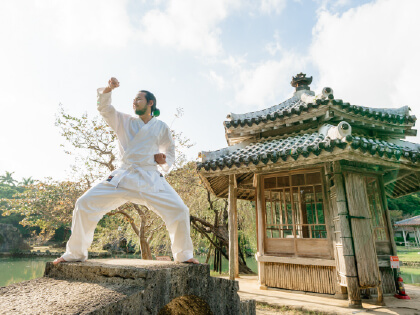
At places such as Shurijo Castle and Shikinaen Royal Garden — landscapes layered with centuries of Ryukyuan culture and the memory of karate — a professional photographer captures your practice within these storied settings.

Wearing a traditional karate gi, participants embody the stances and kata refined through training.
This is not simply a commemorative portrait. It is a moment where the lineage of the land and your own path of practice intersect.

For travelers, it becomes a refined remembrance of the journey. For dedicated practitioners, an image created in karate’s birthplace marks a meaningful chapter in their lifelong discipline.
Standing in quiet dialogue with Okinawa itself, you depart with more than a photograph — you carry a moment inscribed in place, in time, and in your own continuing practice.

Tour Story

What It Means to Be Inscribed in the Birthplace

Karate is not only technique.
It is time carried forward with the land itself.

The stone paths of Shuri. The quiet gardens of Shikinaen. Eaves where the wind passes through.
In these spaces, layers of Okinawa’s history overlap, and the memory of karate — born and nurtured here — continues to breathe.

When you stand in such a place, even a single stance, a single breath, may feel slightly different than before.
This is not about creating a pose for the camera, but about placing your accumulated practice into the landscape.
The belt moves in the wind. Feet meet the ground. The gaze extends outward.

In that moment, it is no longer a record of travel, but a point where your present self and the spirit of karate quietly meet.
To stand in the birthplace is to allow your own path to rest upon it.
When the shutter is released, it captures more than form.
It holds the time of the land, and the time of your own training.
And that image becomes a quiet message carried forward — to the self you will become.

Experience Flow

●1 | Meeting & Transfer to the Location

Participants gather at the designated meeting point before transferring to the selected photo location.
Changing into a karate gi, tying the belt, and preparing for the session.
Rather than simply visiting a sightseeing site, you step toward a place where history and karate still quietly resonate.

●2 | Historical Context & Creative Alignment

Before the session begins, a brief introduction is given about the site’s history and its connection to karate.
Why this place. What has endured here.
With this shared understanding, the creative direction of the shoot is gently aligned.

●3 | Refining Stance & Presence

Participants revisit the stances and kata shaped through their own training.
Breath steadies. The gaze settles.
This is not about performing for the camera, but about standing fully within your practice.
The camera does not create the moment — it witnesses it.

●4 | Location Photo Session

The photographer captures stances, transitions, and stillness within the surrounding landscape.
A suspended breath. A movement held at its peak. A figure grounded between stone, wind, and sky.
Together with Okinawa’s scenery, this chapter of your practice is quietly inscribed.

●5 | Closing & Reflection

The session concludes with guidance regarding photo delivery.
The gi is removed, and you return to the rhythm of the day.
Yet something lingers — a moment carried not only in image, but in the body itself.

<Recommended tours available in this category>

Exploring the Roots of
Okinawan Karate

Discovering the Origins through History and Culture

Tour Overview

Karate is more than a martial art.
Behind its techniques lies the history of the Ryukyu Kingdom, a culture shaped by trade and diplomacy, and the everyday lives of the people of Okinawa.

On this half-day journey, you will visit sites connected to the development of karate — including Shurijo Castle and places that reflect local life, such as an awamori distillery — while exploring why karate emerged in Okinawa and how it was nurtured over time.

The political and diplomatic landscape of the Ryukyu Kingdom. Exchange with China and other Asian regions. The evolution of martial practice. And the spirit passed down within local communities.
Walking alongside your guide, you will come to see karate not merely as a set of techniques, but as a cultural tradition rooted in the land of Okinawa.

Open to beginners and enthusiasts alike, this half-day experience invites you to discover the cultural foundations of Okinawa through the story of karate.

Tour Story

Karate did not appear suddenly.
It was shaped gradually within the history of a particular land.
Shuri, once the political center of the Ryukyu Kingdom, stood at the crossroads of trade and diplomacy. Through exchange with Asia, different cultures and ideas met and influenced one another.

Martial practice was not merely a method of combat. It evolved alongside the shifting atmosphere of its time, taking root within the rhythms of everyday life.
The politics of the kingdom. Diplomacy. Trade. And the daily life of local communities.
Through these layers, karate was nurtured as part of a living culture.

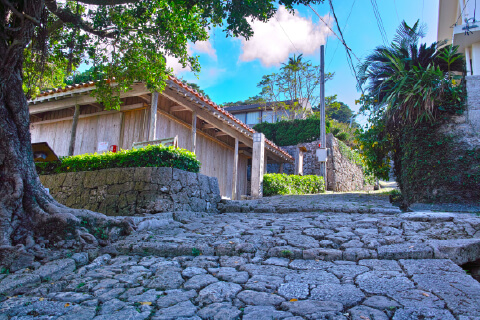
As you walk along stone paths, stand before castle walls, and feel the air of the town, karate no longer feels like a distant historical subject. It begins to reveal itself as part of the story of this land.
It was not created for a select few. It emerged from the lives of people in Okinawa and was carried forward across generations.

This tour is not a time to learn techniques.
Yet by exploring why karate was born in Okinawa, your perspective may begin to shift.

To trace history is to understand cultural context.
And through that understanding, karate can be seen more fully — not only as practice, but as a tradition shaped by the land and the passing of time.
More than simply learning about karate, this is a moment to encounter the time of Okinawa that continues to flow beneath it.

Experience Flow

●1 | Meeting & Introduction to the Shuri Area

After gathering at the designated meeting point, we proceed to the Shuri area.
Once the political and cultural center of the Ryukyu Kingdom, this district played a significant role in the development of karate.
Walking through streets where traces of history remain, your guide will introduce the historical context of Okinawa, inviting you to sense the atmosphere of those who once lived here.

●2 | Visiting Sites Connected to Karate

You will explore sites associated with the evolution of karate, including Shurijo Castle.
Through discussions of the Ryukyu Kingdom’s political and diplomatic landscape, its exchanges with China and other parts of Asia, and the transformation of martial practice, you will gain insight into how karate developed over time.
Standing before these historic places, you will be invited to imagine the era in which karate first took shape.

●3 | Understanding the Connection Between Daily Life and Karate

The tour also includes places that reflect local life, such as an awamori distillery.
Karate was not cultivated only in formal settings; it grew within the rhythms of everyday life.
By exploring the intersection of culture and daily living, you will discover how karate became woven into the fabric of local communities.

●4 | Walking Through Historic Shuri

Strolling along stone paths and sloping streets, you will encounter the physical landscape that shaped both discipline and etiquette.
Here, karate is understood not only as martial practice, but as a reflection of values nurtured within this environment.

●5 | Reflection & Closing

At the conclusion of the tour, you will revisit the question of why karate emerged in Okinawa and how it has been sustained to the present day.
More than a historical walk, this experience offers a deeper understanding of karate as a cultural tradition — and its enduring connection to the land and the time of Okinawa.

<Recommended tours available in this category>

Tracing the Journey of
Okinawan Karate

Understanding Karate as a Cultural Tradition

Tour Overview

Karate cannot be fully understood through a single lineage or individual.
Each school carries its own history. Each master, a distinct path.

This program is designed for dedicated karate practitioners and enthusiasts — a cultural exploration shaped according to your lineage, interests, and areas of inquiry.
Beginning in Shuri and extending across sites connected to the development of Okinawan karate, the itinerary is curated in response to your background and focus. Together, we trace the cultural and historical structures that shaped the art.

The political framework of the Ryukyu Kingdom. Maritime exchange and cross-cultural encounter. The quiet transmission of martial knowledge within families. And the redefinition of martial practice in the modern era.
Yet what lies at the foundation of karate — can it truly be divided by lineage?
Beyond stylistic distinctions, we gently examine how karate was nurtured within the social fabric, climate, and lived experience of Okinawa.

The route is not fixed. It is composed according to your interests and length of stay.
Conducted as a small-group, walking-based program over half a day or a full day, this is not a technical training session.

Rather, by encountering the cultural and historical ground from which karate emerged, you may begin to see your daily practice — and even familiar kata — with renewed depth.
This is an opportunity to trace the culture of karate alongside the enduring flow of Okinawa’s time — and to situate your own practice within that continuum.

Tour Story

Karate does not conclude with a single individual or lineage.
It is a culture that took shape slowly, within the history of a particular land.

Under the distinct political system of the Ryukyu Kingdom, maritime exchange brought encounters across seas, where different philosophies and bodily disciplines met.
Reflecting the spirit of its time, martial knowledge was quietly transmitted within families and local communities.

With the arrival of modernization, martial practice was redefined, gradually systematized under the name “karate.”
Yet what lies at its foundation is not confined to any one lineage.
Before styles were named, before systems were codified — what was already moving in this land?
It was nurtured within the social structures of Okinawa — its climate, its values, and the everyday lives of its people.

As you walk along stone-paved paths and stand before castle ruins, karate begins to emerge not merely as a technical system, but as a layered accumulation of this land’s time.
To look beyond stylistic distinctions and understand the structure that underlies them — is also to see your own practice with greater depth and dimension.

This is not a time to “learn” karate.
Rather, by encountering the historical ground from which it grew, the kata and techniques you engage with each day may begin to reveal a different contour.
To understand karate is to touch the time of Okinawa.
This is a quiet moment to place yourself within that continuum.

Experience Flow

●1 | Opening Dialogue

The path of karate is not uniform. What becomes visible depends on the perspective from which it is traced.
We begin by sharing each participant’s lineage and interests, defining the lens through which the day will unfold.
This dialogue becomes the point of departure.

●2 | Walking the Martial Culture of Shuri

Beginning in Shuri, once the political center of the Ryukyu Kingdom, we visit sites connected to the development of karate, selected according to your interests.
Standing before historical landmarks and walking through preserved streetscapes, we consider how martial practice evolved within specific social structures.
Political governance. Maritime exchange. Transmission within local communities.
How did these overlapping forces give shape to karate as a system — and what remains of them today?

●3 | Situating Lineage within Cultural Context

According to each participant’s lineage and areas of inquiry, we introduce relevant historical figures and developments.
Rather than defining a style in isolation, we examine how it is positioned within the broader cultural structure of Okinawa.
This is not a one-way explanation, but an ongoing exchange that deepens understanding.

●4 | Encountering the Spirit Shaped by Place

Walking along stone paths and sloping streets, we reflect on how values such as discipline, restraint, and etiquette were shaped by environment.
Karate is not only a technical system. It is also a cultural expression formed within climate, society, and lived experience.

●5 | Reflection and Reinterpretation

At the conclusion, we create space to connect the places visited with your own practice.
Why did karate emerge in Okinawa? Why is Okinawa still regarded as its place of origin?
By encountering its foundations, familiar kata and daily training may begin to reveal new dimensions.
This experience is not an end to learning, but a quiet point of departure for renewed practice.
To understand karate is to touch the time of Okinawa that continues to flow beneath it.

<Recommended tours available in this category>

The Ryukyu Kingdom
and Spiritual Beliefs

Walking Through the Royal City of Shuri

Tour Overview

Once the heart of the independent Ryukyu Kingdom, Shuri remains a place where royal pride and the prayers of everyday people quietly endure.

This walking tour explores historic sites such as Shuri Castle and Tamaudun Mausoleum, inviting you to encounter the history and culture of the Ryukyu Kingdom, as well as its deeply rooted spiritual philosophy known as “Shurei.”

Shurei refers to the Ryukyuan value of respect, harmony, and grace — a way of life that honors nature, ancestors, and human relationships, and shaped how both royalty and common people lived their daily lives.

As you walk along the ancient stone - paved paths, listening to the wind, birdsong, and the rustling of trees,
the past and present gently overlap. Moments of prayer and ordinary life, once inseparable, begin to reveal themselves.

Tracing these quiet layers of history, this tour offers more than historical knowledge — it is an invitation to feel the enduring connections between people, nature, and spirit that continue to define Shuri today.

Tour Story

Bathed in the soft light of morning, the town of Shuri feels quietly dignified,
as if your posture naturally straightens the moment you arrive. A breeze slips past vermilion stone walls, birds call from somewhere unseen, and gentle light settles on the uneven stone paths — each detail carrying the weight of time that has flowed through this place.

The walk begins at Tamaudun, the sacred mausoleum where the Ryukyu kings rest. Without a word spoken, footsteps grow softer. Your body seems to understand before your mind does — this is a place of prayer. Here remain the quiet traces of people who honored their ancestors and cherished the continuity of life.

As you continue toward Shuri Castle, the openness of the sky and the presence of the architecture reveal that this was once the heart of an independent kingdom. What was valued here was not the display of power, but meeting others with respect, humility, and care. This way of being is what the people of Ryukyu have long called Shurei.

Descending into the castle town and walking along the stone-paved paths of Kinjo, you begin to sense how royal history and the lives of ordinary people once unfolded within the same flow of time. The uneven stones beneath your feet, flowers resting quietly at doorways, an old well tucked into the landscape — within these everyday scenes remain gentle traces of prayer intertwined with daily life.

This walk is not only a journey through history. It is a time to rediscover—through your own senses — what it means to respect, to pray, and to remain connected. Carried by the breeze of Shuri, a quiet sense of Shurei begins to awaken within you.

Experience Flow

●Tamaudun (Royal Mausoleum)

The journey begins at Tamaudun, the royal mausoleum of the Ryukyu Kingdom. Though located in the heart of Naha, a single step inside reveals a subtle shift in atmosphere — the city noise fades, and a quiet stillness takes its place.
Tamaudun symbolizes the spiritual foundation of the Ryukyu Kingdom, where honoring ancestors and cherishing the continuity of life have long been central values. While it is the resting place of royalty, it also reflects a deeper belief shared by the people of Okinawa — a living connection with their ancestors that continues to gently endure.

●the Shuri Castle

Next, we visit the Shuri Castle, once the political, cultural, and spiritual heart of the Ryukyu Kingdom. Through stories of royal life, diplomacy, and ceremonial practices, we encounter the values that shaped the kingdom’s worldview.
Here, the spirit known as “Shurei”—a philosophy of respect and harmony — can be quietly felt in the air and presence of the place itself. Shurei represents not only respect toward others, but also a way of life that values balance with nature, ancestors, and unseen forces.

●Shuri Kinjo-cho Stone Paved Path

Descending into the castle town, we walk along the Shuri Kinjo-cho Stone Paved Path, a historic path made of Ryukyu limestone that has supported daily life for centuries.
Uneven stones beneath your feet, flowers at doorways, and sacred utaki sites — these quiet details reveal traces of ordinary lives lived alongside royal culture. Here, the connections explored throughout the journey — between people, nature, ancestors, and unseen presences — are no longer abstract ideas, but something woven naturally into everyday life.
Through local food traditions and daily habits, the reasons Okinawa is known as a Blue Zone, a region of remarkable longevity, begin to emerge as a natural extension of how life has long been lived here.

●Lunch|Island Home-Style Cuisine

After the walk, we share a meal centered on island vegetables and home-style Okinawan cooking. This gentle cuisine reflects the wisdom and practices that have supported long, healthy lives.
The flavors, especially after a mindful walk, quietly nourish both body and spirit. For those not driving afterward, enjoying the meal with a glass of locally loved awamori is also an option.